
Why Some Insurance Companies Won't Insure Vacant Homes

Bergen Insurance Group | Home Insurance Education
Why Some Insurance Companies Won't Insure Vacant Homes
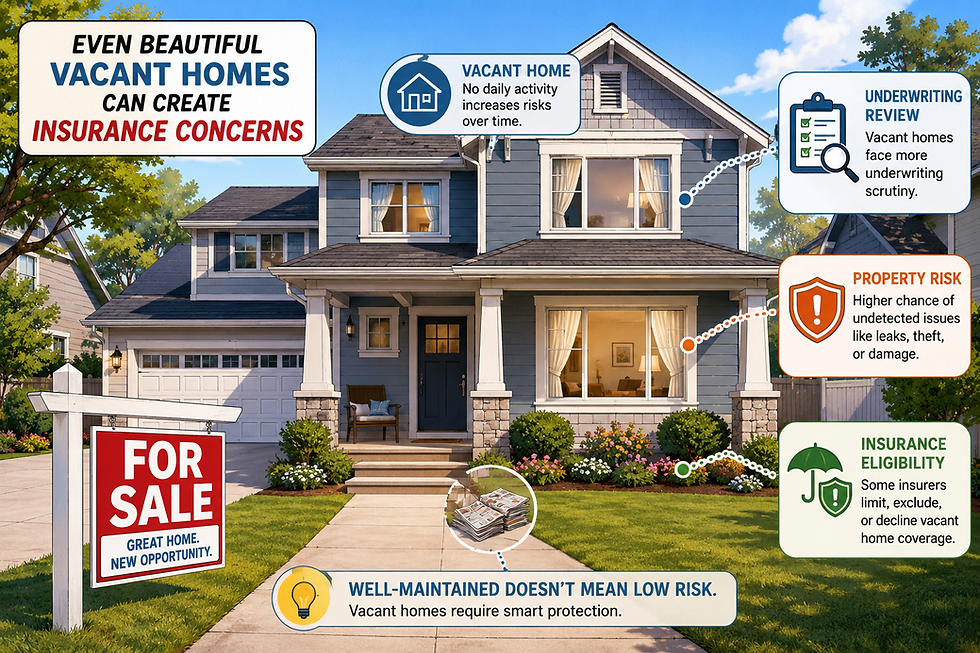
Many homeowners assume that if a home is in good condition, homeowners insurance will remain unchanged—even if nobody is living there.
Unfortunately, that isn't always the case.
One of the most common surprises we encounter involves homes that become vacant because they are:
listed for sale
inherited
undergoing renovations
between tenants
waiting for a new owner to move in
While the property may still be in excellent condition, many insurance companies view vacant homes differently than occupied homes.
Understanding why can help homeowners avoid unexpected coverage issues.
What Is Considered a Vacant Home?
Although definitions vary among insurance companies and policies, a home is generally considered vacant when it is no longer occupied and contains little or no personal property needed for everyday living.
Examples may include:
a home that has been moved out of
an inherited property sitting empty
a newly purchased home awaiting renovations
a home listed for sale after the owners relocate
Vacancy is different from simply being away on vacation.
A home occupied seasonally or temporarily unattended may be treated differently than a truly vacant residence.
Why Insurance Companies Care About Vacancy
Insurance companies evaluate risk.
When a home becomes vacant, several risks may increase.
Examples include:
undetected water leaks
vandalism
theft
fire damage
frozen pipes
delayed emergency response
If nobody is regularly living in the home, damage may go unnoticed for days or even weeks.
A small plumbing leak that might normally be discovered within hours could become a much larger loss.
Example #1: The Home That Was Listed for Sale
A family purchases a new home before selling their existing residence.
The original home sits vacant while listed on the market.
Everything appears fine.
Three weeks later, a pipe bursts during freezing temperatures.
Because no one was living there, the leak continues for several days before being discovered.
What might have been a relatively small repair becomes a major water damage claim.

Vacant Homes May Require Different Insurance
Many homeowners are surprised to learn that a standard homeowners policy may not always be designed for long-term vacancy.
Depending on the circumstances, some insurance companies may:
limit certain coverages
require notification if the home becomes vacant
decline to renew coverage
recommend a vacant home insurance policy
Requirements vary by insurance company, making it important to discuss the situation before leaving a home unoccupied for an extended period.
Example #2: An Inherited Home
A homeowner inherits a family member's home.
The property remains vacant while the estate is settled.
Although utilities remain connected and the lawn is maintained, the home sits empty for several months.
Insurance considerations may differ from those of an owner-occupied residence simply because no one is living there.
Renovations Can Also Create Questions
Many homeowners purchase older homes intending to renovate before moving in.
During this period, the property may be:
partially vacant
under construction
occupied only by contractors
Depending on the scope of renovations, insurance companies may ask additional underwriting questions regarding occupancy and construction activity.
What Homeowners Should Do Before Leaving a Home Vacant
If your home will be unoccupied for an extended period, consider discussing the situation with your insurance professional before it becomes an issue.
Topics may include:
how long the home will be vacant
reason for the vacancy
whether renovations are planned
security measures
utility status
occupancy timeline
Providing this information early may help avoid unexpected underwriting concerns.
Why Independent Insurance Advice Matters
Vacancy is one of the most misunderstood homeowners insurance topics.
A home can be beautifully maintained and still present different insurance considerations simply because no one lives there.
At Bergen Insurance Group, we help New Jersey homeowners understand how vacancy, renovations, inherited homes, homes for sale, and occupancy changes may affect homeowners insurance eligibility and coverage.
FAQs
What is considered a vacant home for insurance purposes?
Definitions vary by insurance company, but a home is generally considered vacant when it is unoccupied and contains little or no personal property used for everyday living.
Does homeowners insurance cover a vacant home?
Some homeowners policies may continue to provide coverage for a period of time, while others may have limitations or require notification. Requirements vary by insurance company and policy.
Can I leave my house vacant while trying to sell it?
Possibly, but if the home will remain vacant for an extended period, it's a good idea to discuss the situation with your insurance professional.
Do I need different insurance for an inherited home?
Depending on occupancy, ownership, and how long the home will remain vacant, different insurance considerations may apply.
Does renovating a home affect homeowners insurance?
It can. Renovations and temporary vacancy may affect underwriting requirements depending on the scope of work and the insurance company.
Other Suggested Articles
Disclaimer
The information provided in this article is intended for general informational purposes only and should not be interpreted as insurance, legal, or financial advice. Definitions of vacancy, policy terms, coverage limitations, underwriting requirements, and eligibility vary among insurance companies. Homeowners should consult with a qualified insurance professional regarding their specific property and insurance situation.


Comments