
Does Your Personal Auto Policy Cover Business Use?

Bergen Insurance Group | Commercial Auto Insurance Education
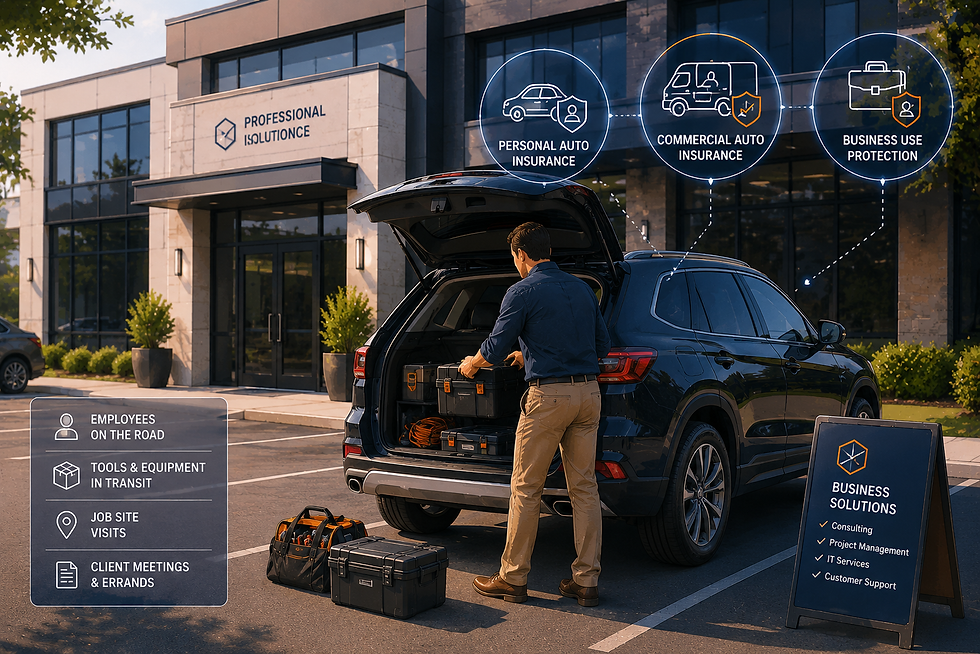
One of the most common misconceptions among small business owners is:
"I use my personal vehicle for work, so my personal auto insurance should cover me."
In many situations, that assumption may be correct.
In other situations, it may create significant insurance problems.
The challenge is that business use of a vehicle is not always black and white.
Many business owners use personal vehicles to:
visit clients
make deliveries
transport tools
collect supplies
travel between job sites
attend business meetings
The question is not simply whether a vehicle is personally owned.
The question is:
How is the vehicle being used?
Understanding the difference can be important when evaluating insurance coverage.
Why This Creates Confusion
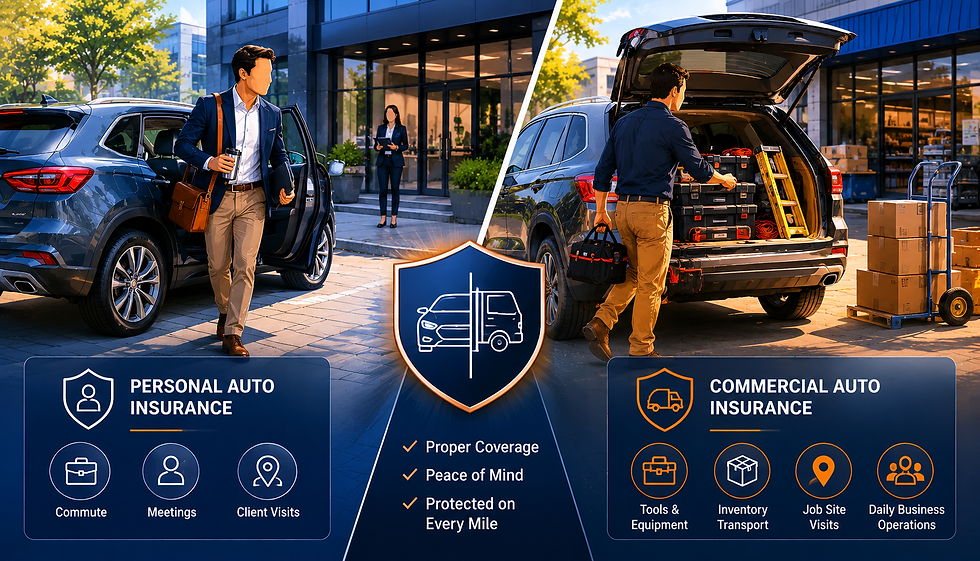
Most people think there are only two categories: Personal Driving and Commercial Driving
In reality, there is often a large gray area in between.
Some business-related driving activities may fit comfortably within a personal auto policy.
Others may create underwriting concerns or require commercial auto coverage.
The answer often depends on:
the business type
vehicle ownership
frequency of use
business activities performed
insurance company guidelines
Example 1: The Realtor
A Realtor drives a personal vehicle to:
show homes
attend inspections
meet clients
The vehicle remains personally owned.
Many people assume this is automatically covered.
However, insurance companies often want to know about business-related vehicle use so they can properly evaluate the exposure.
Example 2: The Property Manager
A property manager uses a personal vehicle daily to:
visit rental properties
inspect units
meet contractors
respond to maintenance issues
Although the vehicle is personally owned, the business use is significant.
This may create different insurance considerations than someone who occasionally drives to a business meeting.
Example 3: The Contractor
A contractor uses a pickup truck to:
transport tools
carry equipment
haul materials
The truck is titled personally.
The owner assumes personal auto coverage is sufficient.
However, regular business use involving tools, equipment, or commercial operations may create exposures that should be reviewed carefully.
Example 4: The Restaurant Owner
A restaurant owner occasionally uses a personal vehicle to:
pick up supplies
transport equipment
handle business errands
Many owners are surprised to learn that occasional business use and primary business use may be viewed differently by insurance companies.

The Bigger Risk: Liability Claims
The concern is not simply vehicle damage.
The bigger concern is often liability.
Imagine a serious accident occurs while:
meeting a client
traveling between business locations
transporting business equipment
conducting company business
Suddenly questions may arise regarding:
vehicle use
business operations
insurance coverage
liability exposure
This is one reason many businesses choose to discuss vehicle usage with their insurance advisor before a loss occurs.
What About Employees Using Their Own Vehicles?
This is another commonly overlooked exposure.
An employee may use their personal vehicle to:
run errands
visit customers
deliver documents
travel between locations
Many business owners assume:
"It's their car, so it's their insurance."
Unfortunately, the business itself may still face liability exposure depending on the circumstances of an accident.
This is one reason Hired and Non-Owned Auto coverage is often discussed for businesses that do not own company vehicles.

Why This Is Becoming More Important
Today's businesses operate differently than they did years ago.
More businesses now rely on:
mobile employees
remote work
delivery services
property visits
customer appointments
As business vehicle use evolves, insurance exposures often evolve as well.
What seems like occasional business driving may actually represent a significant exposure from an underwriting perspective.
How Business Owners Can Protect Themselves
Business owners should periodically review:
who drives for the business
how vehicles are used
whether employees use personal vehicles
vehicle ownership arrangements
liability exposures
A short conversation before a claim can often prevent surprises afterward.
Why Independent Insurance Advice Matters
Every business uses vehicles differently.
A Realtor, apartment building owner, consultant, contractor, and restaurant owner may all have very different vehicle exposures.
At Bergen Insurance Group, we help New Jersey business owners evaluate commercial auto, hired and non-owned auto, liability protection, and other business-related vehicle exposures so they can better understand their insurance options before a loss occurs.
FAQs
Does personal auto insurance cover business use?
It depends. Certain types of business use may be acceptable under some personal auto policies, while others may require commercial auto insurance or additional coverage.
What types of businesses should consider commercial auto insurance?
Businesses that regularly use vehicles for operations, transport equipment, visit customers, make deliveries, or perform business-related driving should discuss their vehicle usage with an insurance professional.
What is Hired and Non-Owned Auto coverage?
Hired and Non-Owned Auto coverage may help protect businesses against certain liability exposures involving rented vehicles or employee-owned vehicles used for business purposes.
Can a personal vehicle be used for business?
Many businesses use personal vehicles for business activities. However, the type and frequency of use should be reviewed with an insurance advisor to determine appropriate coverage.
Why should business owners review vehicle use regularly?
Business operations often change over time, and vehicle exposures may evolve as businesses grow.
Other Suggested Articles
Disclaimer
The information provided in this article is intended for general informational purposes only and should not be interpreted as insurance, legal, or financial advice. Coverage availability, exclusions, underwriting requirements, and policy terms vary by insurance company and individual circumstances. Business owners should consult with a qualified insurance professional regarding their specific vehicle usage and insurance needs.


Comments